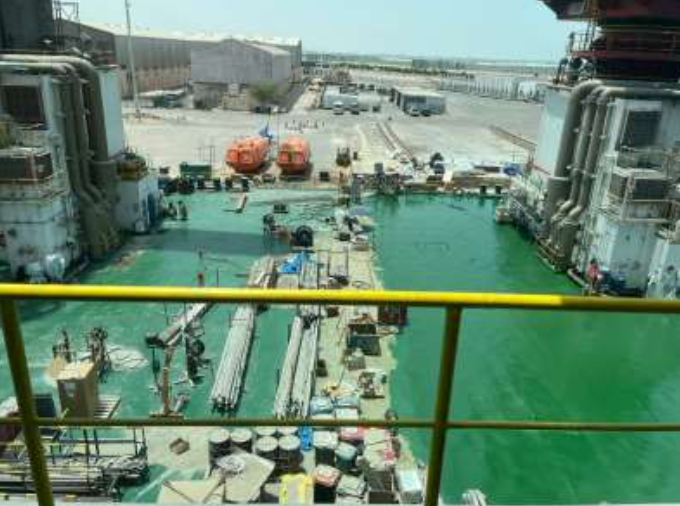
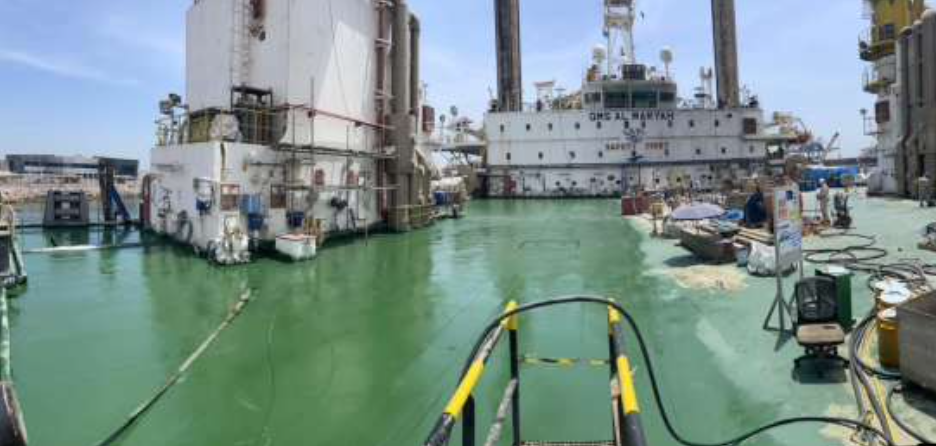
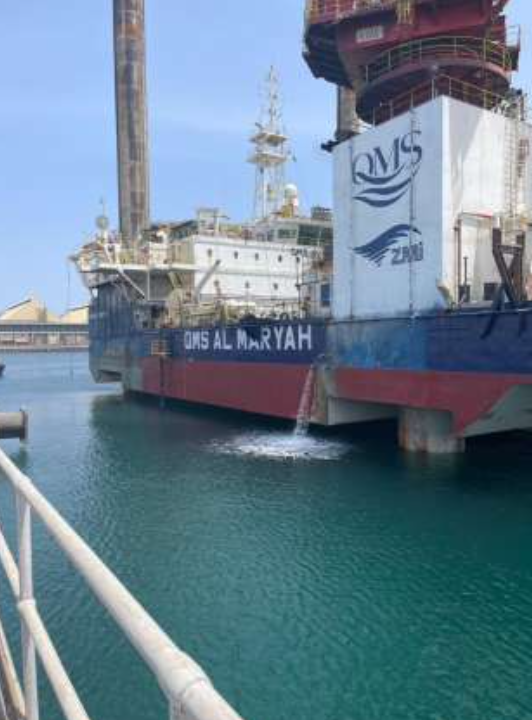
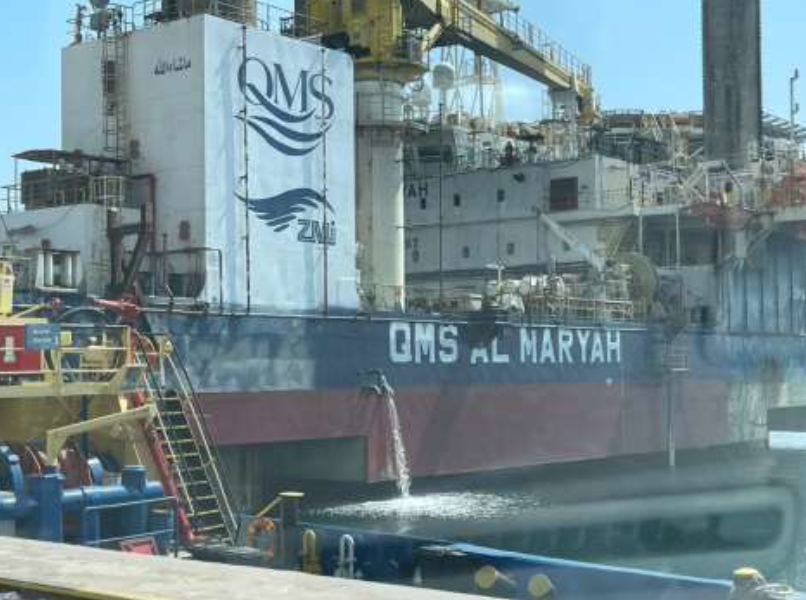
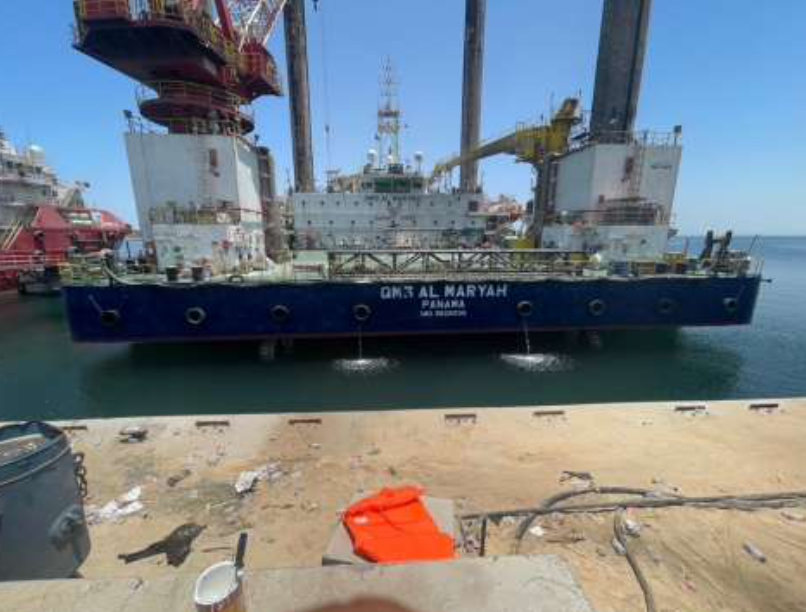
Project Overview
The blasting and painting process for the outer shell and deck of a jack-up barge is
critical for
protecting the structure from corrosion, ensuring its longevity, and maintaining safety
standards.
Below is an overview of the steps typically involved in this process:
- Inspection: The surface is inspected for any existing
coatings, corrosion, or contaminants. Any
structural damage should be repaired before the blasting process begins.
- Blasting Setup: The area is prepared with containment
measures to control dust and debris.
The blasting equipment is set up, usually using abrasive materials like
garnet, grit, or sand.
- Blasting: The outer shell and deck surfaces are blasted to
remove old paint, rust, and other
contaminants. The goal is to achieve the desired surface profile and
cleanliness (usually to a
standard like SSPC-SP 10/NACE No. 2 for near-white metal blast cleaning).
- Inspection: After blasting, the surface is inspected again
to ensure it meets the required
standards. Any areas that need further attention are re-blasted.
- Surface Cleaning: After blasting, the surface is cleaned of
any remaining dust and debris. This
may involve compressed air blowing, vacuuming, or washing with clean water.
- Surface Treatment: Depending on the material and
environmental conditions, a surface
treatment may be applied to enhance paint adhesion or prevent flash rusting
before painting.
- Primer Application: A suitable primer is applied to the
prepared surface. The type of primer
used will depend on the material of the barge, environmental conditions, and
the type of paint
system to be applied later. The primer acts as a bonding layer and helps to
protect the metal
from corrosion.
- First Coat Application: After the primer has cured, the
first layer of topcoat is applied. This
could be a specific marine-grade paint designed to withstand harsh
conditions like saltwater,
UV radiation, and mechanical wear.
- Second Coat (and Additional Coats): Depending on the
specification, additional coats of
paint are applied. Each coat is allowed to cure before the next is applied.
The total number of
coats will depend on the desired thickness and durability.
- Stripe Coating: In areas with edges, welds, or complex
geometries, a stripe coat is often
applied to ensure complete coverage and protection.
- Inspection: Once the painting process is complete, the
surface is inspected for uniformity,
thickness, adhesion, and any defects.
- Touch-ups: Any areas that do not meet the required
standards are touched up or repainted.
- Final Curing: The paint is allowed to fully cure, which may
take several days depending on
the product and environmental conditions.