Project Overview
The shipbreaking project was successfully completed, achieving maximum material
recovery and
minimal environmental impact. The following steps were adhered to during the demolition process:
- Removal of Equipment: Inspection and removal of usable
equipment such as navigation
systems, electronics, furniture, and safety gear.
- Oil and Hazard Removal: Residual fuel, diesel, and
hazardous materials were extracted and
safely disposed of to prevent environmental contamination.
- Cleaning: Detailed cleaning of fuel tanks, cargo
compartments, and machinery spaces to
prevent pollution.
- Inspection: Structural integrity assessment and detailed
safety planning for the breaking
process.
The dismantling process followed a structured sequence:
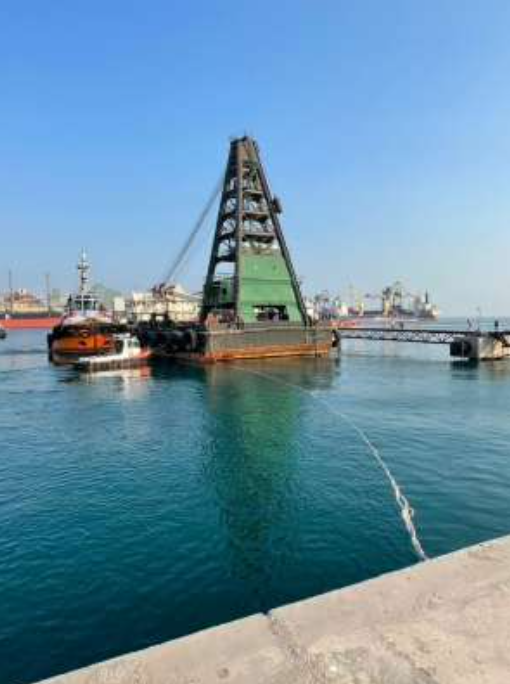
- Tower Crane Cutting: The tower crane was cut piece by piece
to reduce weight and facilitate
safe removal.
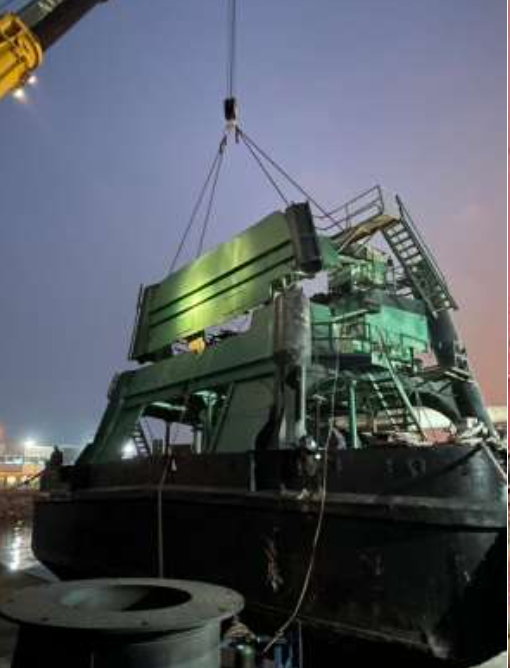
- Pome Cutting: The Pome was dismantled and held by a mobile
crane for safe removal.
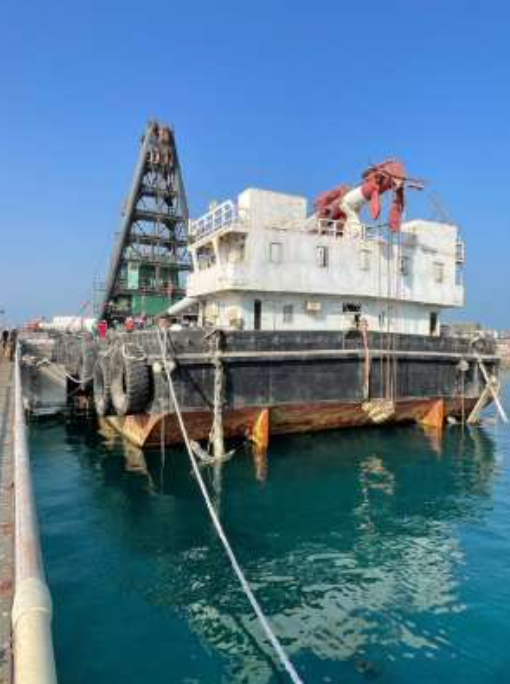
- Shifting: The barge was shifted to access the Accommodation
section.
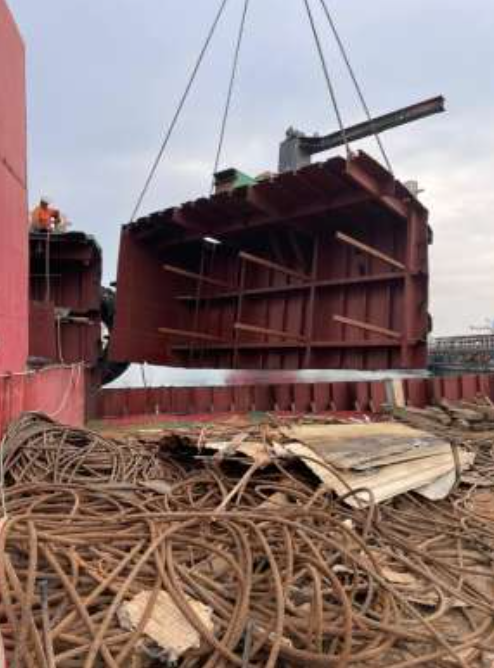
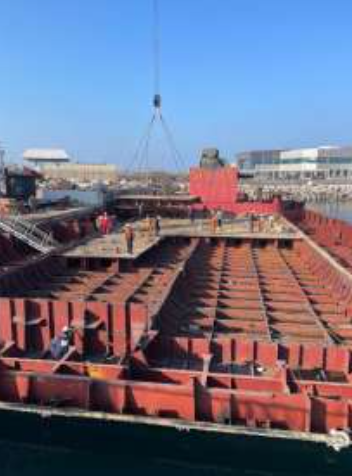
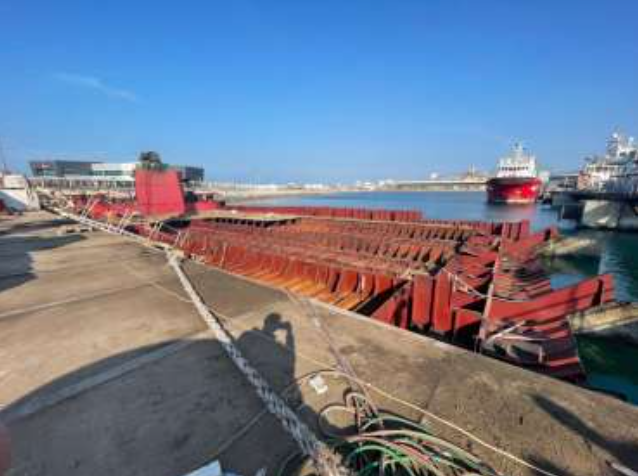
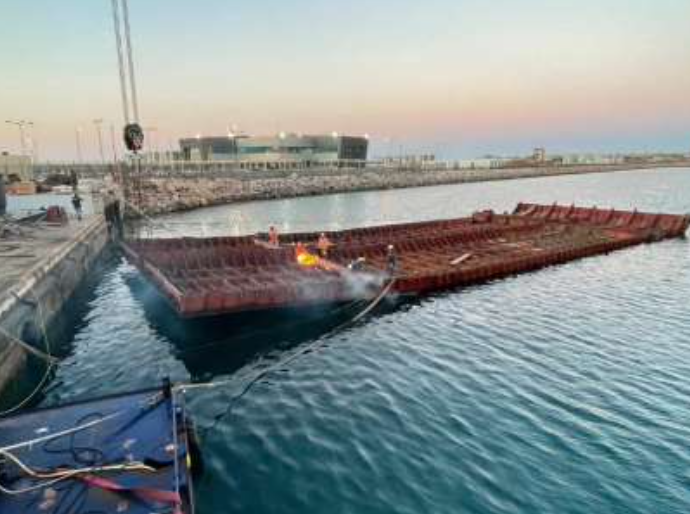
- Hull Cutting: Systematic cutting of the hull to balance
weight and stability.
- Water-Tide Section: Controlled cutting of the water-tide
section to prevent water ingress.
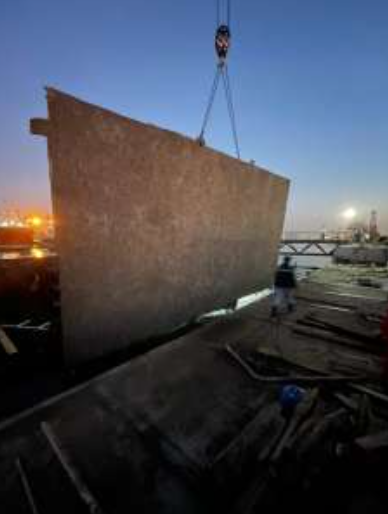
- Final Hull Removal: Removal of the last remaining pieces of
the hull.
- Daily limit: 60 tons per day.
- Site Cleanup: Thorough decontamination and testing of soil
and water.
- Certification: Final inspections by environmental agencies
to certify the site as clean and compliant.
- Regulatory Compliance: Adherence to the Basel Convention,
Hong Kong Convention, and local environmental regulations.